
Fullerton’s Day of Music Turns 11 With 200+ Performers and a Story Worth Knowing
- Joel Beers

- Jun 17
- 5 min read
How a French festival tradition and a city in crisis gave birth to one of SoCal's biggest free music celebrations.
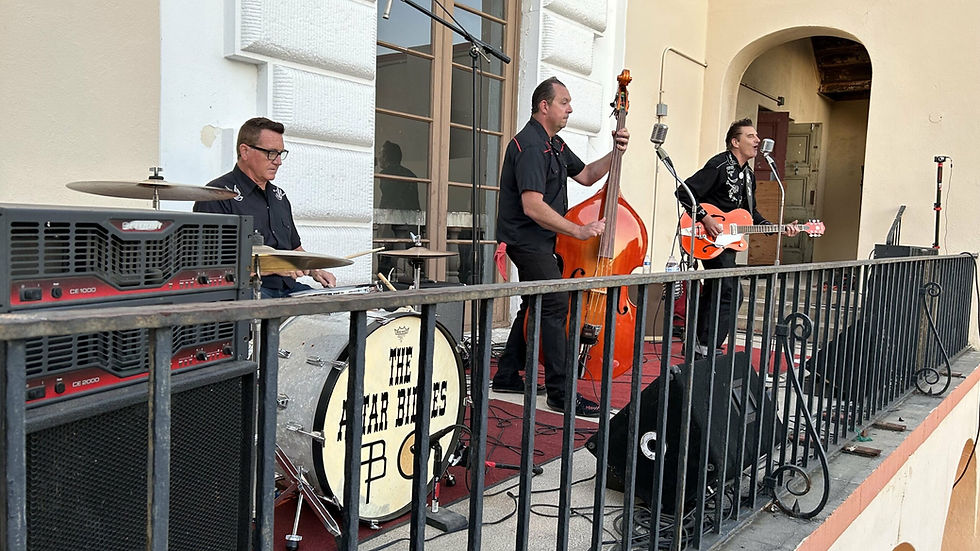
Although it has grown into one of Southern California's largest free music festivals, the 11th annual Day of Music Fullerton, which will be held June 21, might never have taken root were it not for a French cultural tradition and one of the most divisive episodes in the city's history.
The celebration is affiliated with Make Music Day, a worldwide celebration launched 20 years ago and held annually on the summer solstice that encourages free public performances by musicians of all ages and skill levels. According to organizers, last year's Fullerton event featured more venues and performers than any other Make Music Day celebration in Southern California outside San Diego County.
French connection
But its roots stretch back further, to France's Fête de la Musique, a nationwide celebration that began in 1982 that turns streets, parks and public spaces into free performance venues each year.
Glenn Georgieff, a Fullerton native who lived in France in the late 1980s and early 1990s, vividly remembers the festival's communal spirit. Musicians performed everywhere, from street corners and restaurants to major concert halls and opera houses. Large-scale concerts featuring internationally known artists were subsidized by the government, while many cultural institutions opened their doors free of charge.
"It was just a very warm and communal event," Georgieff said. "You could go to the opera or hear music while walking down the street past cafés. It was a very celebratory time."
When Georgieff returned to Orange County, the idea stayed with him. Years later, an unexpected set of circumstances would give him an opportunity to bring a version of France's Day of Music to his hometown.

Galvanized by division
Around 2012, he began discussing the idea with friends who gathered at the Magoski Arts Colony, a free-spirited collective that had transformed an old warehouse into a communal arts space.
The conversations coincided with one of the most divisive periods in recent Fullerton history. The recall election following the death of Kelly Thomas — a mentally ill homeless man who died after a violent encounter with Fullerton police officers — exposed deep political and social divisions throughout the city.
"We got to thinking, you know what?" Georgieff said. "This city needs something to bring everybody together instead of tearing it apart."
Three years later, Fullerton's first Day of Music took place.
Brian Torres, who helped organize that inaugural festival, said the event grew organically, with an all-volunteer staff and no city financial support.
"We had no idea if this thing was going to work out," Torres said. "We didn't have sponsors. We started recruiting musicians, then venues started hearing about it and said they'd be interested. The night before, we were like, 'Holy shit, is this really going to happen?'"
The answer arrived the next day. Thousands filled downtown and the Plaza, establishing what would become an annual tradition.
All genres, all free
In its first year, the festival featured about 35 venues and 100 performers. This year, more than 200 musicians representing nearly every imaginable genre — rock, punk, metal, jazz, classical, country, Latin and more — are scheduled to perform at more than 60 venues across the city during the free, all-day festival, transforming everything from coffeehouses, restaurants and bars to hair salons, bookstores, record shops and even an axe-throwing business and an assisted living facility into stages for a celebration of music.
Most venues are clustered in and around downtown Fullerton, with the Fox Fullerton Theatre, Hillcrest Park, the Plaza and the Wilshire Avenue pedestrian zone serving as major gathering points. But performances extend throughout the city, from the Fullerton Arboretum and Fullerton Skate Park.
The diversity of the venues is matched by the diversity of the music. Punk bands hold court outside Black Hole Records while reggae, blues, country, rock, Latin and indie acts perform elsewhere. Some venues host only a handful of performers while others feature music throughout the day, ensuring that nearly every musical taste is represented somewhere in the city.
It Takes a Village
Pulling off an event of that size still requires a small army of volunteers and months of behind-the-scenes coordination. Among them is Kim Romero, who helps match musicians with venues — a task she describes as more than a full-time job during festival season.
With hundreds of performers and dozens of venues, the process involves far more than simply assigning bands to stages. Some acts require electricity, others prefer intimate settings, and venue owners have varying expectations about volume, genre and performance times. Throughout the spring, Romero fields texts, emails and phone calls from musicians and business owners, working to ensure that everyone from first-time performers to veteran local acts has a place to play.
"The point of Day of Music is to allow anybody and everybody to perform somewhere magical," Romero said.
But why Fullerton?
So why has Fullerton's Day of Music succeeded where similar events have struggled to gain traction?
Part of the answer lies in the city's musical history. From Leo Fender's pioneering guitar factory to the punk scene that emerged from downtown clubs and garages in the 1970s and 1980s, Fullerton has long punched above its weight culturally. The festival's do-it-yourself ethos shares much in common with the independent spirit that helped shape the city's music scene.
Geography helps, too. Much of the festival unfolds in and around a downtown district packed with restaurants, bars, coffeehouses and small businesses. During Day of Music, one of Orange County's densest dining and retail districts effectively becomes an open-air concert venue.
But organizers say the festival's most important ingredient is neither music nor geography. It's volunteerism.
From efforts to preserve open space in Coyote Hills and save the historic Fox Fullerton Theatre, civic activism has long been part of the city's identity. Fullerton's Day of Music emerged from that same tradition.
One of the festival's early slogans was, "It's not a me event, it's a we event," Georgieff said.
"If it wasn't for all the hard work of the businesses, restaurants and volunteers, it wouldn't happen. The volunteerism of the city is what really makes it special."
Although the original organizers have gradually stepped back and the Fox Fullerton Theatre Foundation now handles much of the planning, the festival remains exclusively volunteer-driven.
"When we first set it up, one of the goals was to make it a tradition," Georgieff said. Eleven years later, it looks like the goal has become a reality.
"The majority of the people who originally organized it are no longer essential to putting it on every year,” he added. “I think it's in the blood of the city now."
Day of Music Fullerton
When: 11 a.m.-10 p.m. June 21
Where: More than 60 venues spread across the city with most clustered downtown
Cost: Free
Information: (714) 459-0433, dayofmusicfullerton.com
More Orange County Cities Celebrating Make Music Days
Make Music Anaheim
When: 1-9 p.m. June 21
Where: Anaheim Packing House, 440 S. Anaheim Blvd., Anaheim
Cost: Free
Information: anaheimpackingdistrict.com/makemusic
Fête de la Musique Laguna Beach 2026 / World Make Music Day in Laguna Beach
When: 11 a.m. to 5:30 p.m. June 20; 1 p.m. opening ceremony
Where: Opening ceremony at Main Beach
Cost: Free
Information: lagunabeachsistercities.com/fete-de-la-musique


