
New Art School in Tustin to Offer Bilingual OCSA Alternative
- Lindsay Mack

- Jul 21, 2025
- 6 min read
Updated: Jul 28, 2025
The K-12 school is going through a $35 million-$40 million expansion, and will offer additional instruction in the performing arts, creative writing, visual arts, dance and instrumental music.

Editor's note: A previous version of this story indicated that the new campus in Tustin will open in fall 2025. The new location is not expected to open until fall 2026, or perhaps later.
This fall, Renascence School International (RSI) will open its doors to a new arts conservatory program, which will precede an upcoming permanent location in Tustin, expected to open in fall 2026. Founded in 2010 in Irvine, RSI offers a fresh new way of learning for Orange County students: Elementary attendees will obtain two global seals of biliteracy, one in Mandarin Chinese and one in Spanish, by grade seven as a result of their studies.
The burgeoning school is beloved for its immersive language programs and robust academic courses that strive to prepare and equip future global leaders. RSI currently serves around 76 students, primarily attracting families with prior global exposure like traveling or working abroad.
But starting this fall, RSI widens its focus to the arts. For the past 14 years, RSI has built up its STEM and humanities programs, garnered its Western Association of Schools and Colleges (WASC) accreditation and collected an impressive list of awards including the first place award for National Chinese Immersion Schools in Mathematics (2018), the Asian Entrepreneur of the Year Award, Asian Enterprise Magazine (2014) and the national Outstanding Academic Campus Award (2014).
To support the new arts infrastructure and a larger student base, the school will embark on an estimated $38 million-$40 million expansion that includes acquisition and capital improvement, with funding coming primarily from private active bonds and philanthropic support. Following auditions this past April, RSI plans to admit approximately 100 new students across all disciplines and around 50 total new faculty and staff members for full capacity. Tuition will cost an average of $24,000 per year with the possibility of scholarships.
To initiate and advise on the new arts conservatory programs, the school has assembled a team of industry leaders including Columbia University-educated artist and designer Emma Cheung, nationally renowned musical theater writer John Blaylock, soprano and Lyric Opera of Orange County artistic director Diana Farrell, and arts education leader and founder of Orange County School of the Arts (OCSA) Ralph Opacic.
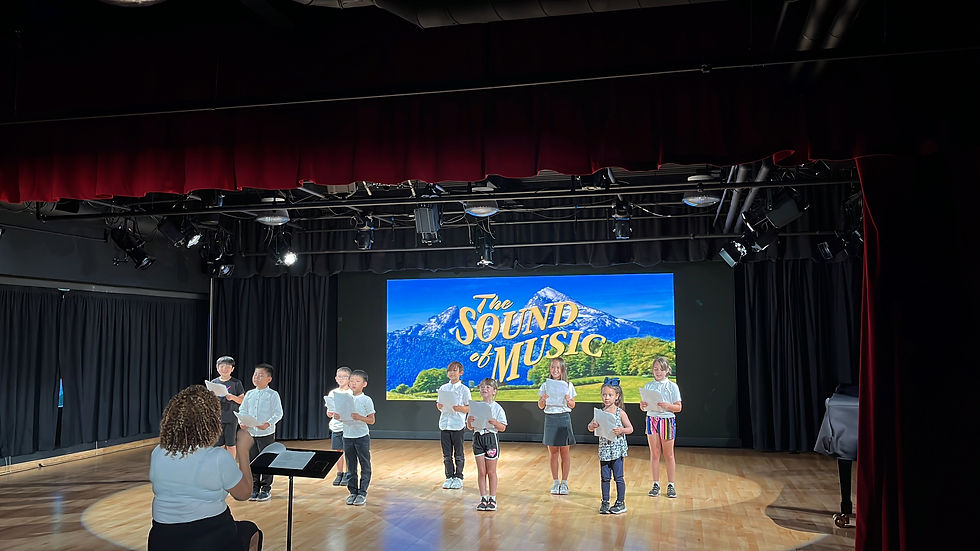
“Based on our experience and what the community has told us, we really see the importance of arts in education,” said founder and president/principal Carrie Mizera.
“We actually started to do a test this year by adding just 30 minutes of arts exploratory (elementary arts introductory instruction) during our school days, and what we’ve seen is kids love it – they just eat it up. It really helps break up the days, especially with the intense academics and all that, and it actually helps them refocus when they get back into academic classes.”
According to Edutopia, studies show that integrating arts education and language immersion into curriculum enhances students’ cognitive abilities and academic performance.
Sixth through eighth grade courses will offer pre-conservatory pathways for students to explore different artistic disciplines including performing arts, creative writing and visual arts, and RSI plans to add other disciplines like dance and instrumental music instruction in the future. Ninth graders will choose one “pathway” and become enrolled in pre-professional training including college-level courses and the opportunity to be involved with local colleges. The school has already forged relationships with institutions like Chapman University, Biola and USC and would like to eventually build pathways for students with schools like these.
And though the school also specializes in trilingual language instruction, middle and high school students may apply to the conservatory programs regardless of their language backgrounds. They will be placed on bilingual rather than trilingual tracks as necessary and given the opportunity to improve their language abilities in their chosen Chinese or Spanish studies.
RSI is anticipated to be a welcome and necessary addition to Orange County’s learning landscape of over 500,000 K-12 students, some of who have limited options for specialized arts programs. Research from Stanford Research Institute Education shows that arts education has declined over the past 25 years, with only 11% of California schools offering a standards-based curriculum across all four state-required arts disciplines. And in addition to its language study component, RSI will also offer practical training on the business of art.
“Because (RSI is) coming from an extremely high-level academic background, the school is going to be different in that it is training thinking artists who are also going to be in business for themselves,” Farrell said. “Such a big part of things that are lacking in arts training these days in general is that in being an artist, you are put out into the world without understanding that you have to be entrepreneurs and business people first; artists are their own businesses. So this comes from a very practical standpoint, and prepares students to go out into the world.”

It is also worth noting that among the talent, excitement and anticipation surrounding the new arts school, one of the appointed arts development team members is Opacic. While he has achieved a considerable feat in establishing one of the premier arts schools in the nation, he was also recently under investigation following a lawsuit in 2022 for alleged sexual misconduct toward a former OCSA student.
When asked why Opacic was chosen given the allegations, Mizera responded, “Dr. Opacic is a well-respected leader and educator in the world of visual and performing arts. Our goal at RSI is to provide the best opportunity for our students to succeed as we build and scale this new arts program. His role as the leader for our arts consulting team is specific to arts programming, arts staffing and arts curriculum development.
“While we are aware that his past allegations remain unclear and unsettled, what we do know is that Dr. Opacic is the chief architect of one of the nation’s premier arts schools. We remain confident in this expertise and ability to create a strong foundation and model for our unique private multilingual, multicultural arts school.”
When asked how he felt about Opacic being on board, one parent, Joe Kramer, said, “As a parent you want your kids to be safe, and that's the number one thing. My understanding with Opacic is that he is a consultant. He's not a teacher. He's not with the kids on a day-to-day basis. He's simply helping the school develop the curriculum and the school of the arts … RSI has a tradition of excellence and community and inclusivity …. I know that (RSI is) very sensitive and conscious of these types of allegations, and they would never put my kids at risk.”
Kramer also commented on RSI’s current educational program: “RSI is … really unique ... for several reasons. First, it's always a small class size; you can really tell the teachers really care about the students … But as far as the programming and what the kids are learning, it's amazing …. This year my daughter … (completed) the first year of the standardized testing … and on average, my daughter was anywhere from one to three grade levels ahead of her peers, depending on the subject. I'm really excited for the arts … to have the first multilingual school of the arts in the country is pretty amazing.”

Another parent, Jennifer So said, “When the pandemic hit, I participated in the Zoom online schooling, and that was really when I had a great awakening of what the product was …. (From) the online Zoom that I witnessed ... what I thought was really special was that the teachers were speaking only Chinese or only Spanish and every single child was participating. It wasn’t only one or two kids, because there are some kids that are Chinese speakers that are able to dominate the classroom. Everybody was participating and everybody understood.”
Ultimately, RSI hopes to help unite the community through the arts.
“Because the arts community is very diverse, it can be very segmented, but I think there is a need to bring all of that together,” Mizera said. “Our goal is eventually to be ‘the hub’ – that we will have a theater, a cultural center where people can come and enjoy our different types of arts. (We also want) to promote the importance of language, because I think in the U.S. we have this tendency of just being monolingual, which is not wrong, but we also see in Europe, in Asia, that people are exposed to multiple languages and there are so many benefits to that. We want to bring that awareness to the community, especially at the younger age level.”


